
Primary Sources
A bill of sale recording the purchase of a slave, desertion lists from a Confederate army regiment, writing manuals used by freedmen and women to achieve literacy – these and other primary sources will be featured and examined throughout the course. Selected from the collections of Columbia University’s Rare Book & Manuscript Library, these materials will complement the lectures and discussion forums to enrich our understanding of the United States in the Era of Civil War and Reconstruction.
Introduction to Primary Sources
A primary source is a document, image, or artifact that provides firsthand or eyewitness information about a particular historical person, event, or idea. Typical examples of primary sources include letters, diaries, newspapers, photographs, paintings, maps, and oral histories. Historians use primary sources to answer research questions and to gather evidence to inform their arguments.
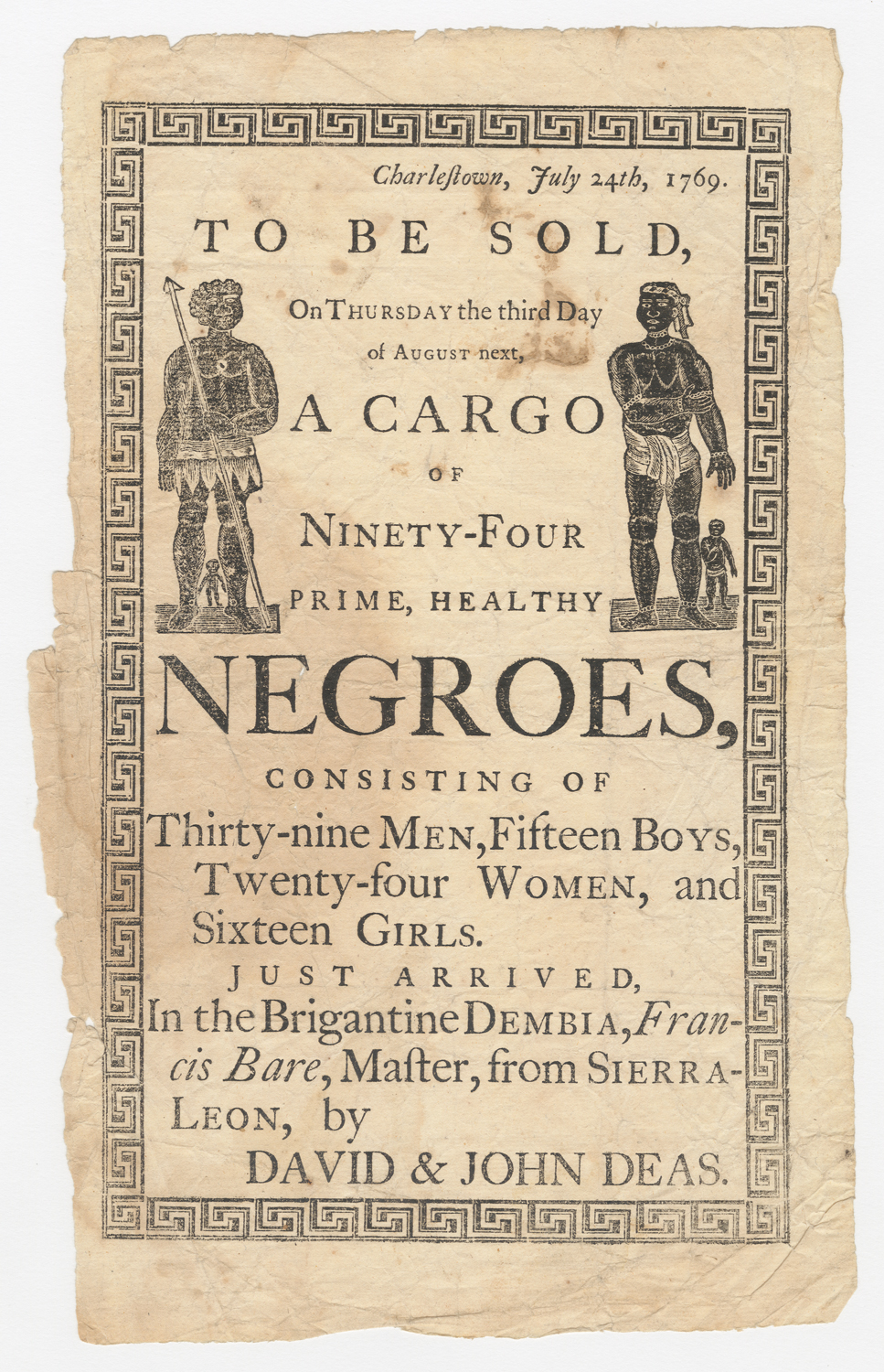
Collection: George A. Plimpton Papers (Box 52) Columbia University, RBML.
This broadside announcement of the 1769 arrival of the ship Dembia to Charleston, South Carolina, describes a tragic historical event –- the slave auction. It was created to inform local elites of the opportunity to bid on their fellow human beings. For historians, however, this text can also be used as evidence for a variety of scholarly questions, including inquiries about demographics, iconography, communications, capitalism, and gender.
This is only one example of how a single artifact, image, or document might be used to inform a broader argument or question. In the coming sections we will present a variety of these unique materials selected from the collections of Columbia University’s Rare Book & Manuscript Library
The RBML is Columbia University’s principal repository for primary source collections. The range of collections in RBML span more than 4,000 years and comprise rare printed works, cylinder seals, cuneiform tablets, papyri, and Coptic ostraca; medieval and renaissance manuscripts; as well as art and realia. Some 500,000 printed books and 14 miles of manuscripts, personal papers, and records form the core of the RBML holdings.
Key primary sources chosen from these collections by historians will complement the scholarly interpretations presented in the lectures and discussion forums. Content-based modules using these primary sources will appear as part of the section sequences throughout the course.
Different types of texts offer varying potential questions and answers. Wills, financial records, and military accounts document the day-to-day functioning of a slave society. Photographic albums, engravings, and printed ephemera provide glimpses into the iconography of nineteenth-century culture. Personal belongings and correspondence beckon toward the intimate details of private lives, while mass-produced keepsakes blur the lines between historical evidence and pop-cultural kitsch. We will investigate the origins and intended functions of these materials. Placing individual documents in context will allow students the chance to think about the past in new ways. Asking scholarly questions of the materials will demonstrate how historians work to provide fresh interpretations of historical evidence
For scholars, these materials –- and the questions they raise -– constitute the foundational elements of historical work. Interrogating primary sources is one of the fundamental tasks every historian must perform in order to craft a nuanced, contingent, and evidence-based argument. The “Primary Sources” section of this course introduces students to that process
For further reading on the use of primary sources in historical research, students might consult these works:
Andrews, Thomas, and Flannery Burke. “What Does it Mean to Think Historically?” Perspectives on History (January 2007).
Barton, Keith C. “Primary Sources in History: Breaking Through the Myths.” Phi Delta Kappan 86 (June 2005).
Wineburg, Sam. Historical Thinking and Other Unnatural Acts: Charting the Future of Teaching the Past. Philadelphia: Temple University Press, 2001
Primary Sources in the Course
- 2A. Working with Primary Sources - A Sample Examination
- 2B. Examining a Bill of Sale
- 3A. Inventory of the Goods of Chattel
includes Historical Interpretations of a Primary Source - 4A. Imprimatur of Objective Science
- 6A. Free Labor and the Republicans
- 8A. Lincoln: Myth and Legend
- 9A. Harpers Ferry Raid
- 10A. Lincoln's Life Mask